What Is Forex Trading?
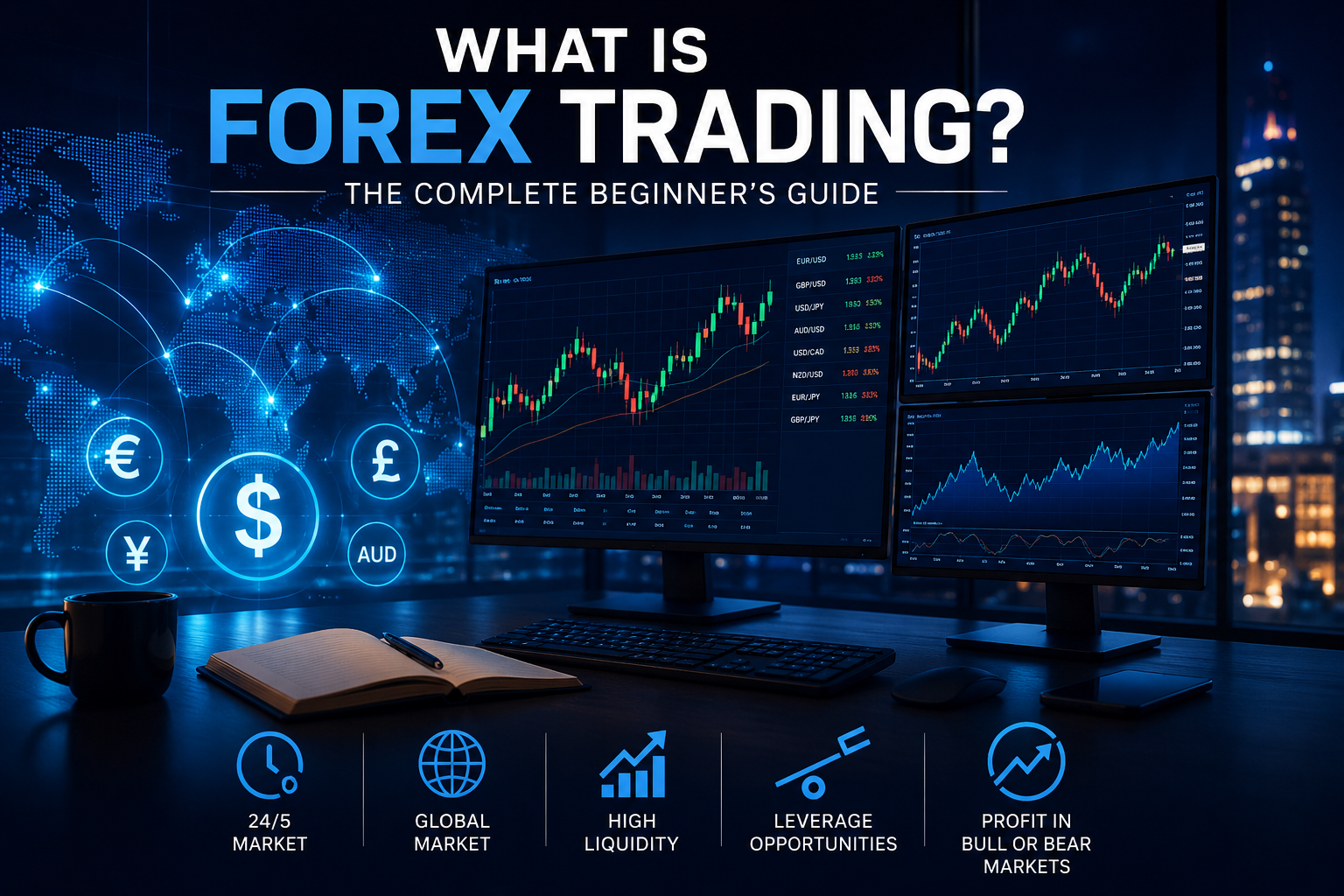
If you’ve ever wondered how people trade currencies like the US Dollar, Euro, British Pound, or Japanese Yen, you’ve already encountered the world of forex trading.
The foreign exchange market, commonly known as the forex market or FX market, is the largest and most actively traded financial market in the world. Every day, more than $7 trillion worth of currencies are exchanged by banks, governments, multinational companies, investment firms, and millions of individual traders.
Unlike stock markets that operate during fixed business hours, the forex market is open 24 hours a day, five days a week, allowing traders around the world to buy and sell currencies across different global trading sessions.
For beginners, forex trading can seem confusing because of unfamiliar terms like currency pairs, pips, leverage, spreads, margin, and lots. The good news is that these concepts are much easier to understand than they first appear. Once you learn the basics, you’ll see that the forex market follows logical principles that anyone can study and practice.
Whether your goal is to build a new skill, understand how global currencies move, or eventually become a trader, this guide will walk you through everything you need to know in simple, beginner-friendly language.
By the end of this article, you’ll understand how the forex market works, who participates in it, how traders make decisions, the risks involved, and the essential knowledge every beginner should have before placing their first trade.
Table of Contents
- What Is Forex Trading?
- How Does the Forex Market Work?
- Who Trades Forex?
- Understanding Currency Pairs
- Major, Minor, and Exotic Currency Pairs
- What Are Pips, Lots, and Leverage?
- Why Do Currency Prices Move?
- Advantages of Forex Trading
- Risks Every Beginner Should Know
- How to Start Forex Trading
- Frequently Asked Questions
- Final Thoughts
What Is Forex Trading?
Forex trading, also known as foreign exchange trading or FX trading, is the process of buying one currency while simultaneously selling another with the aim of making a profit from changes in their exchange rates.
Think of it like exchanging money before traveling abroad. For example, if you’re traveling from Nigeria to the United Kingdom, you would exchange Nigerian Naira (NGN) for British Pounds (GBP). The exchange rate determines how many Pounds you receive for your Naira.
Forex traders use the same concept—but instead of exchanging currencies for travel, they trade them to benefit from price movements.
For example, if you believe the Euro will become stronger against the US Dollar, you can buy the EUR/USD currency pair. If your prediction is correct and the Euro rises in value, you can sell the pair later at a higher price and make a profit.
On the other hand, if you believe the Euro will weaken against the US Dollar, you can sell the EUR/USD pair first and buy it back later at a lower price. This means traders can potentially profit whether the market is rising or falling.
Unlike investing in company shares, forex trading doesn’t involve owning a business. Instead, you’re trading the value of one currency against another.
Forex Trading at a Glance
| Forex Trading | Explanation |
|---|---|
| What is traded? | National currencies |
| Market Size | Over $7 trillion traded daily |
| Trading Hours | 24 hours a day, Monday to Friday |
| Main Goal | Profit from changes in currency prices |
| Who Trades? | Banks, governments, companies, institutions, and retail traders |
| Can beginners learn? | Yes, with proper education, practice, and risk management |
A Simple Example
Imagine the current exchange rate for EUR/USD is:
1.1000This means:
1 Euro = 1.10 US Dollars
You believe the Euro will become stronger.
So you buy EUR/USD.
A few hours later, the price moves to:
1.1050Because the price increased, the value of your trade has also increased. If you decide to close your trade at this point, you could make a profit (excluding trading costs such as spreads or commissions).
If the price had moved lower instead, your trade would have been at a loss.
This simple principle—buying low and selling high, or selling high and buying back lower—is the foundation of forex trading.
Why Is Forex So Popular?
Millions of people are attracted to forex trading because it offers several unique advantages:
- The market is open 24 hours a day during the trading week.
- You can trade from almost anywhere with an internet connection.
- The market is highly liquid, meaning trades can usually be opened and closed quickly.
- You can potentially benefit from both rising and falling markets.
- Many brokers offer free demo accounts, allowing beginners to practice without risking real money.
However, it’s important to remember that forex trading also carries significant risks. Success requires education, patience, discipline, and proper risk management—not luck.
How Does the Forex Market Work?
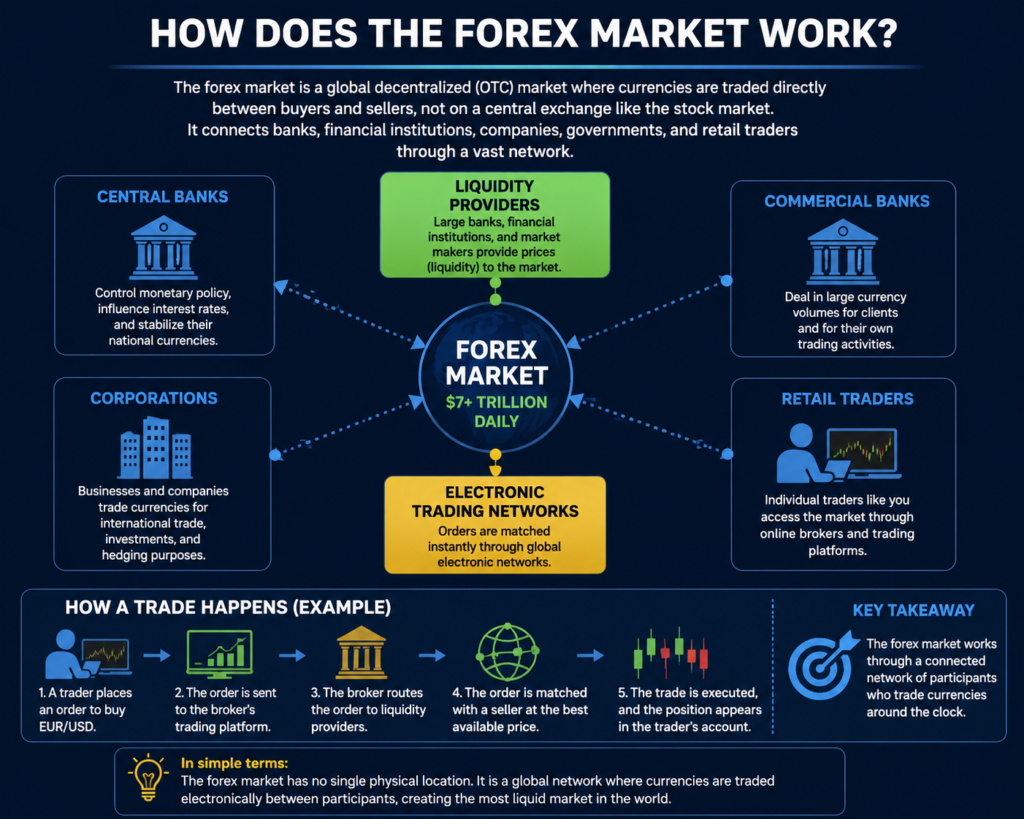
Unlike the stock market, the forex market does not have one central exchange. Instead, currencies are traded electronically through a worldwide network of banks, financial institutions, governments, corporations, brokers, and individual traders.
Whenever you buy one currency, you are simultaneously selling another. This is why currencies are always quoted in pairs, such as:
- EUR/USD
- GBP/USD
- USD/JPY
- AUD/USD
For example:
If you believe the Euro will become stronger than the US Dollar, you buy EUR/USD.
If the Euro rises against the Dollar, you make a profit.
If it falls, you make a loss.
Every trade follows this simple process:
- You place a trade using your broker.
- The broker sends your order to liquidity providers.
- The order is matched almost instantly.
- Your trade appears inside your trading account.
Because trading happens electronically, orders are executed within milliseconds.
The Forex Market Never Sleeps
One of the biggest advantages of forex trading is that it operates 24 hours a day, five days a week.
Trading follows the world’s major financial centres.
| Session | Major Cities |
|---|---|
| Sydney Session | Sydney |
| Tokyo Session | Tokyo |
| London Session | London |
| New York Session | New York |
As one market closes, another opens, creating continuous trading opportunities throughout the week.
This means traders can participate before work, after work, or almost any time that suits their schedule.
Who Participates in the Forex Market?
The forex market consists of several participants, including:
- Central Banks
- Commercial Banks
- Investment Funds
- Multinational Companies
- Governments
- Hedge Funds
- Retail Traders (individual traders like you)
Retail traders make up only a small portion of the overall market, but thanks to online brokers, anyone can now access the world’s largest financial market with just a computer or smartphone.
Key Takeaway
The forex market works by connecting millions of buyers and sellers around the world through electronic trading networks. Every trade involves buying one currency while selling another, creating opportunities to profit from changes in exchange rates.
Understanding Currency Pairs
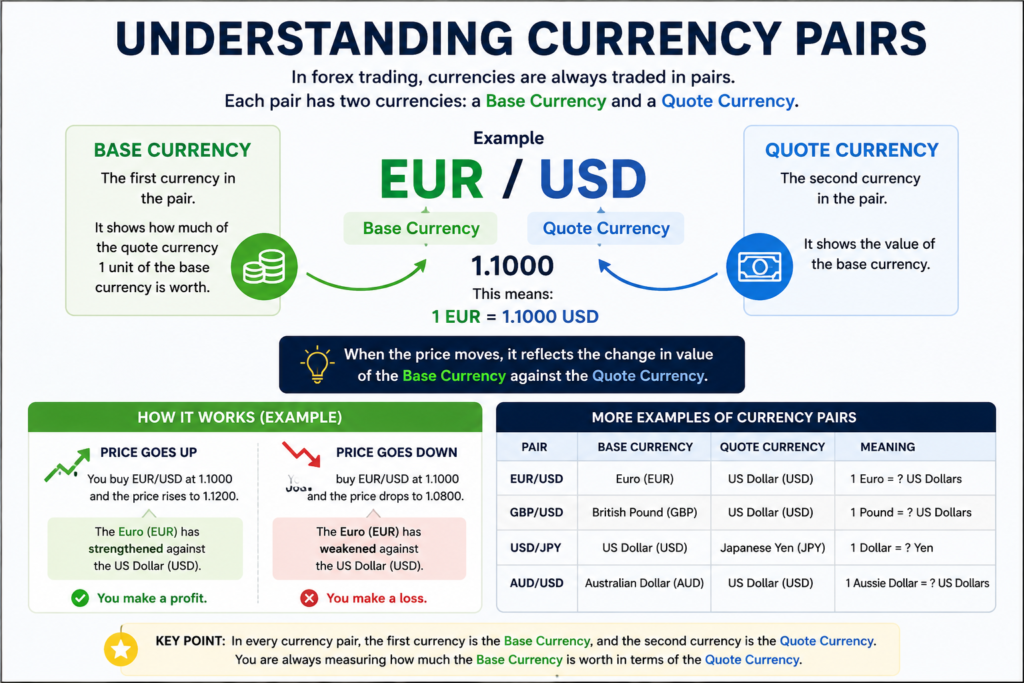
In forex trading, currencies are always traded in pairs because you are comparing the value of one currency against another.
A currency pair shows how much of one currency is needed to buy another currency.
For example, if you see:
EUR/USD = 1.1000This means:
1 Euro is worth 1.1000 US Dollars.
The first currency in the pair is called the base currency.
The second currency is called the quote currency.
So in EUR/USD:
| Part of Pair | Currency | Meaning |
|---|---|---|
| Base Currency | EUR | The currency being measured |
| Quote Currency | USD | The currency used to measure the base currency |
If EUR/USD rises, it means the Euro is getting stronger against the US Dollar.
If EUR/USD falls, it means the Euro is getting weaker against the US Dollar.
Simple Example
Let’s say EUR/USD is trading at:
1.1000You believe the Euro will rise against the US Dollar, so you buy EUR/USD.
Later, the price moves to:
1.1200That means the Euro became stronger.
If you close your trade at that higher price, you may make a profit.
But if the price falls to:
1.0800that means the Euro became weaker, and your trade may lose money.
Common Currency Pair Examples
| Currency Pair | What It Means |
|---|---|
| EUR/USD | Euro against the US Dollar |
| GBP/USD | British Pound against the US Dollar |
| USD/JPY | US Dollar against the Japanese Yen |
| AUD/USD | Australian Dollar against the US Dollar |
| USD/CAD | US Dollar against the Canadian Dollar |
Key Point
When you trade forex, you are not just buying one currency alone. You are buying one currency and selling another at the same time.
This is why understanding currency pairs is one of the first things every beginner must learn.
Types of Currency Pairs
Not all currency pairs behave the same way. Forex traders generally divide them into three categories: Major Pairs, Minor Pairs, and Exotic Pairs.
Understanding these categories helps you choose which markets are most suitable for your trading style.
1. Major Currency Pairs
Major pairs are the most traded currencies in the world. They always include the US Dollar (USD) and usually offer:
- High liquidity
- Tight spreads
- Fast trade execution
- Lower trading costs
These pairs are ideal for beginners because they are easier to trade and generally have more stable price movements.
Examples of Major Pairs
| Pair | Description |
|---|---|
| EUR/USD | Euro vs US Dollar |
| GBP/USD | British Pound vs US Dollar |
| USD/JPY | US Dollar vs Japanese Yen |
| USD/CHF | US Dollar vs Swiss Franc |
| AUD/USD | Australian Dollar vs US Dollar |
| USD/CAD | US Dollar vs Canadian Dollar |
| NZD/USD | New Zealand Dollar vs US Dollar |
2. Minor Currency Pairs
Minor pairs do not include the US Dollar.
They are also called Cross Currency Pairs.
Although they are actively traded, they usually have slightly wider spreads than major pairs.
Examples
| Pair | Description |
|---|---|
| EUR/GBP | Euro vs British Pound |
| EUR/JPY | Euro vs Japanese Yen |
| GBP/JPY | British Pound vs Japanese Yen |
| AUD/NZD | Australian Dollar vs New Zealand Dollar |
3. Exotic Currency Pairs
Exotic pairs combine one major currency with a currency from an emerging or developing economy.
These pairs usually experience:
- Higher volatility
- Wider spreads
- Lower liquidity
- Greater price fluctuations
Because of the increased risk, exotic pairs are generally not recommended for beginners.
Examples
| Pair | Description |
|---|---|
| USD/TRY | US Dollar vs Turkish Lira |
| USD/ZAR | US Dollar vs South African Rand |
| USD/MXN | US Dollar vs Mexican Peso |
Key Takeaway
If you’re just starting your forex journey, focus on Major Currency Pairs. They are the most liquid, have lower trading costs, and are generally easier to analyze than Minor or Exotic pairs.
What Makes Currency Prices Move?
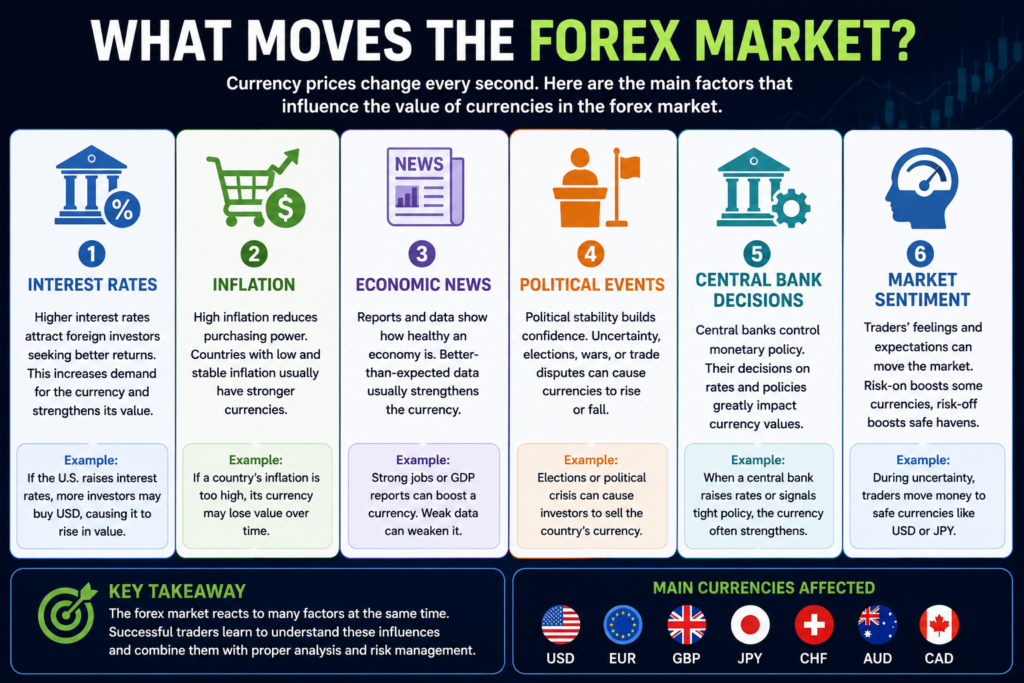
The value of a currency is constantly changing because of supply and demand. When more people want to buy a currency than sell it, its value generally increases. When more people want to sell it than buy it, its value usually falls.
Several important factors influence these price movements every day.
1. Interest Rates
Interest rates are one of the biggest drivers of the forex market.
Central banks, such as the US Federal Reserve or the European Central Bank, set interest rates to control inflation and support economic growth.
Higher interest rates often attract foreign investors because they can earn better returns on their money. As demand for that country’s currency increases, its value may rise.
Lower interest rates often have the opposite effect, causing the currency to weaken.
2. Inflation
Inflation measures how quickly prices for goods and services increase over time.
Countries with low and stable inflation usually have stronger currencies because their purchasing power remains relatively stable.
High inflation reduces purchasing power and often causes a country’s currency to lose value.
3. Economic News
Economic reports can move the forex market within seconds.
Important reports include:
- Employment data
- Gross Domestic Product (GDP)
- Consumer Price Index (CPI)
- Retail Sales
- Manufacturing Reports
If economic data is stronger than expected, the currency often strengthens.
If the results are weaker than expected, the currency may fall.
4. Political Events
Political stability gives investors confidence.
Events such as elections, government policy changes, wars, trade disputes, or political uncertainty can cause significant movements in currency prices.
Markets generally prefer stable governments and predictable economic policies.
5. Central Bank Decisions
Central banks regularly announce monetary policy decisions.
Traders closely monitor these announcements because they may include:
- Interest rate changes
- Inflation forecasts
- Economic outlooks
- Future policy guidance
Even the language used during a central bank press conference can move the market dramatically.
6. Market Sentiment
Sometimes prices move simply because of how traders feel about the economy.
If investors become optimistic, they may buy riskier currencies such as the Australian Dollar or British Pound.
During periods of uncertainty or fear, traders often move their money into safer currencies like the US Dollar, Swiss Franc, or Japanese Yen.
Key Takeaway
Forex prices move because millions of buyers and sellers react to economic data, interest rates, political events, and global news every second. Successful traders learn to understand these factors instead of relying on guesswork.
Understanding Bid Price, Ask Price, and Spread
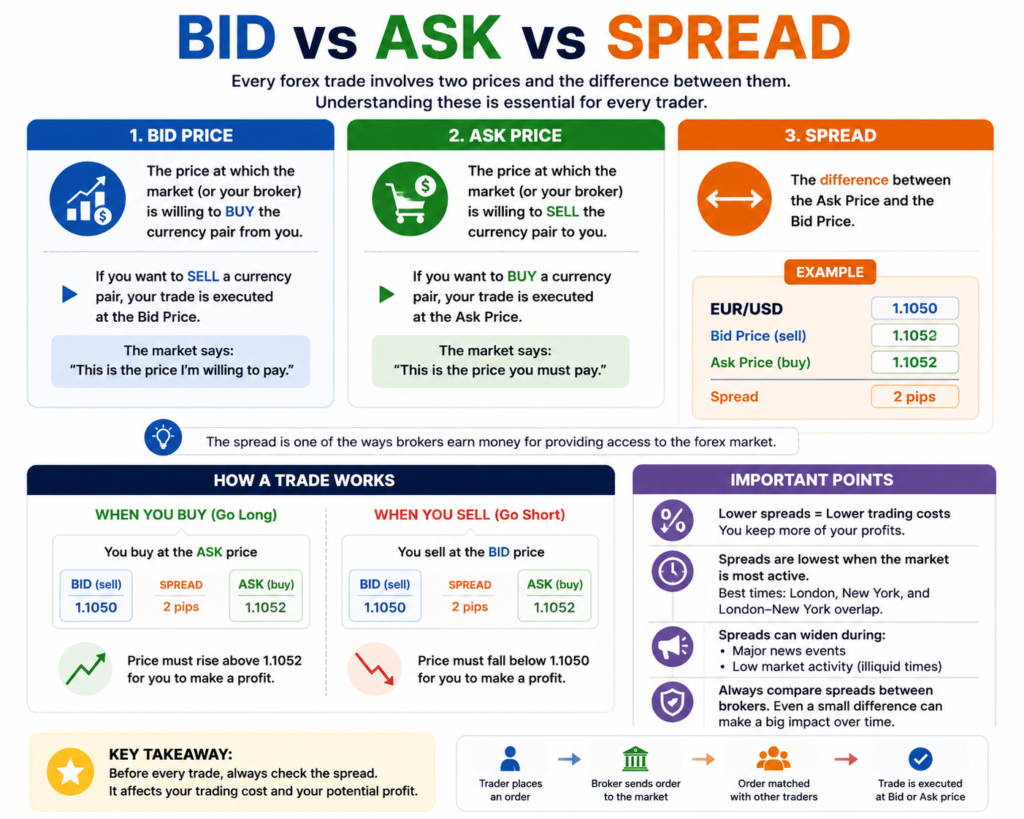
Every forex trade involves two prices: the Bid Price and the Ask Price. The difference between these two prices is called the Spread.
Understanding these three terms is essential because they affect every trade you place.
What Is the Bid Price?
The Bid Price is the price at which the market (or your broker) is willing to buy a currency pair from you.
If you want to sell a currency pair, your trade will be executed at the Bid Price.
Think of it as the market saying:
“This is the price I’m willing to pay for your currency.”
What Is the Ask Price?
The Ask Price is the price at which the market (or your broker) is willing to sell a currency pair to you.
If you want to buy a currency pair, your trade will be executed at the Ask Price.
Think of it as the market saying:
“This is the price you must pay to buy this currency.”
What Is the Spread?
The Spread is simply the difference between the Bid Price and the Ask Price.
For example:
EUR/USD

Bid: 1.1050

Ask: 1.1052

Spread: 2 pips
In this example, the spread is 2 pips.
The spread is one of the ways brokers earn money for providing access to the forex market.
Why Does the Spread Matter?
A smaller spread means lower trading costs.
A larger spread means higher trading costs.
This is why experienced traders often choose brokers that offer:
- Tight spreads
- Fast execution
- Reliable order processing
Lower spreads allow traders to keep more of their profits over time.
When Are Spreads Usually Lowest?
Spreads are generally lowest when the market is most active.
This usually happens during:
- The London Trading Session
- The New York Trading Session
- The London–New York session overlap
During major news events or periods of low market activity, spreads can widen significantly.
Key Takeaway
Before every trade, always check the spread. Even a small difference in trading costs can have a significant impact on your long-term profitability, especially if you trade frequently.
What Is a Pip?
A pip (short for “Percentage in Point”) is the smallest standard price movement in the forex market. Traders use pips to measure profits, losses, and price changes instead of saying a currency moved by a decimal number.
For most currency pairs, one pip equals 0.0001, which is the fourth decimal place.
For example:
EUR/USD moves from 1.1000 to 1.1001
That is a movement of 1 pip.
If the price moves from:
1.1000 → 1.1010
The market has moved 10 pips.
Some brokers display prices with an extra decimal place called a fractional pip (or pipette), but traders still calculate their trades using full pips.
Examples of Pip Movements
EUR/USD
- 1.1000 → 1.1005 = 5 pips
- 1.1000 → 1.1015 = 15 pips
- 1.1000 → 1.0985 = -15 pips
GBP/USD
- 1.2500 → 1.2520 = 20 pips
AUD/USD
- 0.6600 → 0.6612 = 12 pips
What About Japanese Yen Pairs?
Currency pairs involving the Japanese Yen (JPY) are slightly different.
Instead of four decimal places, they usually use two decimal places.
For example:
USD/JPY moves from:
145.20 → 145.21
That equals 1 pip.
Likewise,
145.20 → 145.50
equals 30 pips.
Why Are Pips Important?
Every forex trader measures performance in pips because they provide a universal way to compare trades regardless of currency pair or account size.
For example:
- Trader A makes $50 on a small account.
- Trader B makes $500 on a large account.
Looking only at dollars doesn’t tell the full story.
However, if both traders made 50 pips, they achieved the same market performance. The difference is simply the amount of money they risked.
That’s why experienced traders often say things like:
- “I made 120 pips this week.”
- “My stop loss was 25 pips.”
- “My target is 80 pips.”
Key Takeaways
- A pip is the standard unit used to measure price movement in forex.
- Most currency pairs use the fourth decimal place.
- Japanese Yen pairs use the second decimal place.
- Traders use pips to calculate profits, losses, stop losses, and take-profit levels.
- Learning to think in pips instead of dollars is one of the first habits every successful forex trader develops.
How Much Is One Pip Worth?
A pip’s value depends on three main factors:
- The currency pair you are trading.
- The lot size you choose.
- The exchange rate.
The larger your position size, the more each pip is worth.
Below are the standard pip values for USD-based currency pairs.
| Lot Size | Units | Approximate Pip Value |
|---|---|---|
| Standard Lot | 100,000 | $10 per pip |
| Mini Lot | 10,000 | $1 per pip |
| Micro Lot | 1,000 | $0.10 per pip |
| Nano Lot | 100 | $0.01 per pip |
Example 1
You buy one Standard Lot of EUR/USD.
The market moves 25 pips in your favor.
25 × $10 = $250 Profit
Example 2
You buy one Mini Lot of EUR/USD.
The market moves 25 pips.
25 × $1 = $25 Profit
Example 3
You buy one Micro Lot of EUR/USD.
The market moves 25 pips.
25 × $0.10 = $2.50 Profit
Most beginners should start with Micro Lots or Nano Lots while learning. This allows you to gain real trading experience while keeping your financial risk very low.
Once you understand risk management and become consistently profitable, you can gradually increase your position size.
Key Takeaways
- Pip value depends on your lot size.
- Larger lot sizes produce larger profits and losses.
- Beginners should focus on learning, not making large profits.
- Always calculate your risk before opening any trade.
What Is a Lot Size?
A lot size refers to the number of currency units you buy or sell in a forex trade. It determines the size of your position and directly affects how much money you gain or lose for every pip the market moves.
Think of a lot size as the quantity of currency you are trading.
There are four common lot sizes in forex:
| Lot Type | Units Traded | Approximate Pip Value |
|---|---|---|
| Standard Lot | 100,000 | $10 per pip |
| Mini Lot | 10,000 | $1 per pip |
| Micro Lot | 1,000 | $0.10 per pip |
| Nano Lot | 100 | $0.01 per pip |
Standard Lot
A Standard Lot represents 100,000 units of the base currency.
If the market moves one pip, your trade gains or loses approximately $10.
This position size is generally used by experienced traders with larger account balances.
Mini Lot
A Mini Lot represents 10,000 currency units.
Each pip is worth approximately $1.
Many intermediate traders use Mini Lots because they offer a good balance between profit potential and risk.
Micro Lot
A Micro Lot represents 1,000 currency units.
Each pip is worth approximately $0.10.
Most beginners should start trading with Micro Lots because they significantly reduce risk while allowing you to gain real market experience.
Nano Lot
A Nano Lot represents 100 currency units.
Each pip is worth approximately $0.01.
Although not all brokers offer Nano Lots, they are excellent for practicing with very small amounts of money.
Example
Suppose you buy EUR/USD.
If you trade:
- Standard Lot → Every 10-pip move = approximately $100
- Mini Lot → Every 10-pip move = approximately $10
- Micro Lot → Every 10-pip move = approximately $1
- Nano Lot → Every 10-pip move = approximately $0.10
As you can see, the market moves exactly the same way regardless of your lot size. The only difference is how much money you make or lose.
Which Lot Size Should Beginners Use?
For new traders, starting small is the smartest approach.
Using Micro Lots or Nano Lots allows you to:
- Learn without risking large amounts of money.
- Practice proper risk management.
- Build confidence.
- Develop consistency before increasing position size.
Many professional traders began with Micro Lots before gradually increasing their trading size as their skills improved.
Key Takeaways
- A lot size determines how much currency you trade.
- Larger lot sizes increase both profits and losses.
- Beginners should use Micro Lots or Nano Lots whenever possible.
- Choosing the correct lot size is one of the most important parts of risk management.
What Is Leverage?
Leverage allows traders to control a larger trading position using a relatively small amount of their own money.
Instead of paying the full value of a trade, your broker temporarily provides the remaining funds needed to open the position.
For example, if your broker offers 1:100 leverage, it means you can control a position worth $100,000 with only $1,000 of your own capital.
Leverage can significantly increase your potential profits, but it can also increase your potential losses. This is why it should always be used responsibly.
How Leverage Works
Imagine you have $500 in your trading account.
Without leverage, you could only open trades worth up to $500.
With 1:100 leverage, that same $500 allows you to control a position worth up to $50,000.
This gives traders access to larger market opportunities without needing a large amount of capital.
Common Leverage Ratios
| Leverage | What It Means |
|---|---|
| 1:10 | Control $10 for every $1 in your account |
| 1:30 | Control $30 for every $1 |
| 1:50 | Control $50 for every $1 |
| 1:100 | Control $100 for every $1 |
| 1:200 | Control $200 for every $1 |
| 1:500 | Control $500 for every $1 |
| 1:1000 | Control $1,000 for every $1 |
Some brokers may offer even higher leverage, but higher leverage also means higher risk.
Example
Suppose you have $1,000 in your trading account.
With 1:100 leverage, you can open a position worth up to $100,000.
If the market moves in your favor, your profits can be much larger than if you traded without leverage.
However, if the market moves against you, your losses will also increase more quickly.
Is High Leverage Good?
Many beginners believe higher leverage automatically means higher profits.
This is a common misconception.
Professional traders do not focus on using the highest leverage available. Instead, they focus on managing risk and protecting their trading capital.
High leverage should never replace a solid trading strategy or proper risk management.
Tips for Beginners
If you’re new to forex trading:
- Learn on a demo account first.
- Start with smaller position sizes.
- Avoid using the maximum leverage available.
- Always use a stop-loss order.
- Never risk more than a small percentage of your account on a single trade.
Building consistency is far more important than trying to make quick profits.
Key Takeaways
- Leverage allows you to control larger trades with less capital.
- It increases both potential profits and potential losses.
- Higher leverage also means higher risk.
- Beginners should use leverage cautiously and prioritize risk management over large position sizes.
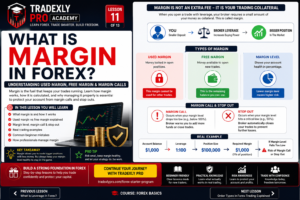
What Is Margin?
Margin is the amount of money your broker sets aside from your trading account to open and maintain a leveraged trade.
It is not a fee or a trading cost. Instead, it acts as a security deposit while your trade remains open.
Without sufficient margin, you cannot open new trades or maintain existing positions.
How Margin Works
Suppose you have $1,000 in your trading account.
Your broker offers 1:100 leverage.
You decide to open a trade worth $50,000.
Because you’re using leverage, your broker only requires a small portion of that amount as margin.
For this trade, approximately $500 of your account may be reserved as margin while the remaining funds stay available as free margin.
Understanding the Different Types of Margin
| Margin Term | Meaning |
|---|---|
| Used Margin | The amount currently reserved for your open trades. |
| Free Margin | The funds still available to open new positions or absorb market fluctuations. |
| Equity | Your account balance plus or minus any floating profit or loss from open trades. |
| Margin Level | A percentage that shows the health of your trading account based on your equity and used margin. |
Example
Imagine your account contains:
- Account Balance: $1,000
- Used Margin: $300
- Free Margin: $700
You open another position requiring $200 in margin.
Your account now becomes:
- Used Margin: $500
- Free Margin: $500
As long as your trades remain healthy, everything continues normally.
However, if your losses become too large, your available margin decreases.
What Is a Margin Call?
A Margin Call occurs when your account no longer has enough equity to support your open positions.
When this happens, your broker may warn you that additional funds are needed or that you should reduce your exposure.
If losses continue increasing, the broker may automatically close some or all of your open trades to prevent your account from going into a negative balance.
This process is called a Stop Out.
How to Avoid Margin Calls
Good traders rarely experience margin calls because they manage their risk carefully.
You can reduce the chances of receiving a margin call by:
- Using smaller lot sizes.
- Avoiding excessive leverage.
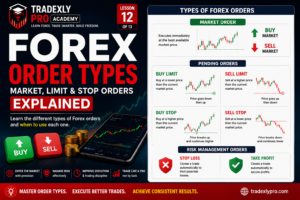
- Always trading with a stop-loss order.
- Never risking a large percentage of your account on a single trade.
- Monitoring your free margin before opening additional positions.
Key Takeaways
- Margin is the amount of money required to open and maintain a leveraged trade.
- It is not a fee charged by your broker.
- Free Margin represents the funds available for new trades.
- A Margin Call happens when your account equity falls too low.
- Proper risk management helps prevent margin calls and protects your trading account.
Long and Short Positions in Forex
One of the unique advantages of the forex market is that traders can potentially profit whether prices are rising or falling.
This is possible because you can either buy (go long) or sell (go short) a currency pair.
Understanding the difference between these two types of trades is essential for every forex trader.
What Is a Long Position?
A Long Position means you are buying a currency pair because you believe its price will increase.
When you go long, you expect the base currency to strengthen against the quote currency.
Example
Suppose EUR/USD is trading at:
1.1000
You believe the Euro will strengthen against the US Dollar.
You buy EUR/USD.
A few hours later, the price rises to:
1.1050
Since the price increased, your trade is now in profit.
This is called a Long Trade.
What Is a Short Position?
A Short Position means you are selling a currency pair because you believe its price will decrease.
When you go short, you expect the base currency to weaken against the quote currency.
Example
Suppose EUR/USD is trading at:
1.1000
You believe the Euro will weaken.
You sell EUR/USD.
Later, the market falls to:
1.0950
Because the price moved lower, your trade is now profitable.
This is called a Short Trade.
Long vs Short Comparison
| Long Position | Short Position |
|---|---|
| Buy a currency pair | Sell a currency pair |
| Expect prices to rise | Expect prices to fall |
| Profit if the market goes up | Profit if the market goes down |
| Loss if the market falls | Loss if the market rises |
Why This Makes Forex Different
Unlike many traditional investments, forex traders are not limited to making money only when markets rise.
The ability to buy and sell gives traders opportunities in both bullish and bearish market conditions.
This flexibility is one of the reasons why forex is one of the most actively traded financial markets in the world.
However, it is important to remember that both long and short trades carry risk. A correct trading decision depends on proper market analysis, sound risk management, and disciplined execution.
Key Takeaways
- A Long Position means buying because you expect prices to rise.
- A Short Position means selling because you expect prices to fall.
- Forex traders can potentially profit in both rising and falling markets.
- Every trade should be based on analysis rather than guesswork or emotion.
Forex Trading Sessions
Unlike the stock market, which operates during fixed business hours, the forex market is open 24 hours a day, five days a week. This is possible because trading moves from one major financial center to another as different countries begin and end their business day.
The continuous nature of the forex market gives traders flexibility to trade at different times depending on their schedule and preferred trading style.
The Four Major Forex Trading Sessions
There are four main trading sessions in the forex market.
| Trading Session | Major Financial Centre | Typical Market Activity |
|---|---|---|
| Sydney Session | Sydney, Australia | Market opens for the trading week with relatively lower volatility. |
| Tokyo Session | Tokyo, Japan | Asian markets become active, with increased movement in JPY-related pairs. |
| London Session | London, United Kingdom | The busiest and most liquid trading session. |
| New York Session | New York, United States | High trading volume, especially when it overlaps with London. |
Sydney Session
The Sydney Session marks the beginning of the forex trading week.
Although trading activity is generally lower than during the London or New York sessions, it is still an important period for currencies such as:
- AUD/USD
- NZD/USD
Tokyo Session
The Tokyo Session is the largest trading session in Asia.
Currency pairs involving the Japanese Yen often experience increased activity during this period.
Popular pairs include:
- USD/JPY
- EUR/JPY
- GBP/JPY
London Session
The London Session is considered the most important trading session because it accounts for a significant portion of global forex trading volume.
During this session:
- Liquidity is very high.
- Spreads are often lower.
- Price movements tend to be stronger.
Many professional traders prefer trading during the London Session because of the increased market activity.
New York Session
The New York Session is another highly active trading period.
Many important economic reports from the United States are released during this session, often causing increased volatility in the market.
Currency pairs involving the US Dollar are particularly active during this time.
The London–New York Overlap
One of the most active periods in the forex market occurs when the London and New York sessions are open at the same time.
During this overlap:
- Trading volume reaches its highest levels.
- Liquidity is excellent.
- Spreads are usually tighter.
- Many significant market moves occur.
This is why many experienced traders choose to trade during the London–New York overlap.
Which Trading Session Is Best for Beginners?
For most beginners, the London Session and the London–New York overlap provide the best trading conditions because they offer:
- Higher liquidity.
- Better price movement.
- Lower spreads.
- More trading opportunities.
However, beginners should focus on learning and developing a trading plan rather than trying to trade every session.
Key Takeaways
- The forex market operates 24 hours a day from Monday to Friday.
- Trading moves between Sydney, Tokyo, London, and New York.
- The London Session is the busiest forex trading session.
- The London–New York overlap usually offers the highest trading volume and liquidity.
- Understanding trading sessions helps traders choose the best times to trade based on their strategy and preferred currency pairs.
Types of Forex Market Analysis
Every successful forex trader makes trading decisions based on analysis rather than emotions or guesswork.
Market analysis helps traders understand what is happening in the market and identify potential trading opportunities.
There are three main types of forex analysis:
- Technical Analysis
- Fundamental Analysis
- Sentiment Analysis
Most professional traders combine all three to make more informed trading decisions.
Technical Analysis
Technical analysis involves studying price charts and using historical market data to predict future price movements.
Technical traders believe that price movements often follow recognizable patterns.
Common technical analysis tools include:
- Support and Resistance
- Trend Lines
- Moving Averages
- RSI (Relative Strength Index)
- MACD
- Bollinger Bands
- Fibonacci Retracement
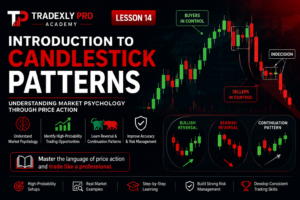
- Candlestick Patterns
For example, if EUR/USD has repeatedly bounced from the same price level several times, a trader may identify that level as support and look for buying opportunities.
Technical analysis is one of the most popular methods used by retail forex traders.
Fundamental Analysis
Fundamental analysis focuses on economic and political events that influence currency values.
Instead of studying charts, fundamental traders pay attention to:
- Interest Rate Decisions
- Inflation Reports
- Employment Data
- GDP Growth
- Central Bank Statements
- Retail Sales
- Manufacturing Reports
- Political Stability
For example, if the US Federal Reserve increases interest rates, the US Dollar may strengthen because investors are attracted by higher returns.
Fundamental analysis helps traders understand why the market is moving.
Sentiment Analysis
Sentiment analysis measures the overall mood of the market.
It helps traders determine whether most market participants are optimistic or pessimistic.
For example:
If traders believe the global economy is improving, they may buy higher-risk currencies such as:
- Australian Dollar (AUD)
- New Zealand Dollar (NZD)
- British Pound (GBP)
During periods of uncertainty, investors often move their money into safer currencies like:
- US Dollar (USD)
- Swiss Franc (CHF)
- Japanese Yen (JPY)
Understanding market sentiment helps traders avoid trading against strong market momentum.
Which Type of Analysis Is Best?
There is no single “best” type of analysis.
Many experienced traders combine all three approaches.
For example:
- Fundamental analysis helps identify the overall market direction.
- Technical analysis helps determine the best entry and exit points.
- Sentiment analysis helps confirm whether traders are buying or selling.
Using multiple forms of analysis often provides a more complete understanding of the market.
Key Takeaways
- Technical analysis focuses on price charts and indicators.
- Fundamental analysis focuses on economic and political events.
- Sentiment analysis measures overall market confidence.
- Combining different types of analysis can improve trading decisions.
- Successful traders rely on analysis rather than emotions or guesswork.
Risk Management: The Key to Long-Term Success
Many beginners believe that successful forex trading is about finding the perfect strategy or predicting every market movement.
In reality, the traders who survive and succeed over the long term are those who understand and apply proper risk management.
Risk management is the process of protecting your trading capital by controlling how much you risk on each trade.
Even the best traders experience losing trades. The difference is that they keep their losses small and allow their winning trades to grow.
Why Risk Management Is Important
Without risk management, a few losing trades can quickly wipe out your trading account.
With proper risk management, even a series of losses can be recovered over time because your account remains protected.
Professional traders focus first on preserving their capital. Making profits comes second.
Never Risk Too Much on One Trade
One of the most common rules among experienced traders is the 1% Rule.
This means you should never risk more than 1% of your trading account on a single trade.
For example:
| Account Balance | Maximum Risk Per Trade (1%) |
|---|---|
| $100 | $1 |
| $500 | $5 |
| $1,000 | $10 |
| $5,000 | $50 |
| $10,000 | $100 |
By following this rule, even a series of losing trades will not significantly damage your account.
Always Use a Stop-Loss Order
A stop-loss order automatically closes your trade if the market moves against you by a certain amount.
Using a stop-loss helps:
- Limit potential losses.
- Remove emotional decision-making.
- Protect your trading capital.
- Maintain trading discipline.
Trading without a stop-loss can expose your account to unnecessary and potentially large losses.
Aim for a Positive Risk-to-Reward Ratio
Before opening any trade, compare how much you are risking to how much you expect to gain.
For example:
- Risk: $20
- Potential Reward: $60
This gives you a Risk-to-Reward Ratio of 1:3.
Many professional traders look for trades where the potential reward is at least twice the amount they are risking.
Avoid Overtrading
Many beginners believe that placing more trades leads to more profits.
In reality, overtrading often results in:
- Emotional decisions.
- Increased trading costs.
- Poor-quality trade setups.
- Larger losses.
Quality is always more important than quantity.
It is better to take one well-planned trade than several impulsive trades.
Control Your Emotions
Fear and greed are two of the biggest reasons traders fail.
Successful traders:
- Follow a trading plan.
- Accept that losses are part of trading.
- Avoid revenge trading.
- Stay patient.
- Remain disciplined.
Emotional control is just as important as technical knowledge.
Key Takeaways
- Risk management protects your trading capital.
- Never risk more than a small percentage of your account on a single trade.
- Always use a stop-loss order.
- Look for favorable risk-to-reward ratios.
- Focus on consistency rather than chasing quick profits.
- Long-term success comes from discipline, patience, and proper money management.
How to Start Forex Trading: A Step-by-Step Guide
Now that you understand the fundamentals of the forex market, you’re ready to learn how to begin trading responsibly.
Starting the right way is important. Many beginners lose money because they rush into live trading without first learning the basics or practicing on a demo account.
Follow these steps to build a strong foundation.
Step 1: Learn the Basics
Before risking any money, make sure you understand:
- How the forex market works.
- Currency pairs.
- Pips and lot sizes.
- Leverage and margin.
- Risk management.
- Basic market analysis.
A solid education will save you from many common beginner mistakes.
Step 2: Choose a Regulated Forex Broker
Your broker is the company that provides access to the forex market.
When choosing a broker, look for:
- Strong regulation.
- Competitive spreads.
- Fast trade execution.
- Reliable customer support.
- A user-friendly trading platform.
- Negative balance protection (where available).
Choosing a trusted broker is one of the most important decisions you’ll make as a trader.
Step 3: Open a Demo Account
A demo account allows you to practice trading using virtual money.
This helps you:
- Learn how trading platforms work.
- Practice placing trades.
- Test strategies.
- Build confidence.
- Develop discipline.
Treat your demo account as if it were real money. The habits you build during practice will carry over to your live trading.
Step 4: Create a Trading Plan
Every successful trader follows a trading plan.
Your trading plan should answer questions such as:
- Which currency pairs will I trade?
- What strategy will I use?
- How much will I risk per trade?
- When will I enter a trade?
- When will I exit a trade?
- What is my daily or weekly trading schedule?
A written trading plan helps remove emotions from your decision-making.
Step 5: Learn Risk Management
Before trying to make profits, learn how to protect your trading capital.
Good risk management includes:
- Using stop-loss orders.
- Choosing appropriate lot sizes.
- Risking only a small percentage of your account per trade.
- Avoiding excessive leverage.
Protecting your capital should always be your first priority.
Step 6: Start Small
When you’re ready to move from a demo account to a live account, begin with a small amount of money that you can afford to lose.
Use Micro Lots or Nano Lots while gaining real trading experience.
Your goal is not to become rich overnight.
Your goal is to become consistently profitable over time.
Step 7: Keep Learning
The forex market is constantly changing.
Successful traders continue improving by:
- Reading educational articles.
- Studying charts.
- Keeping a trading journal.
- Reviewing both winning and losing trades.
- Staying informed about economic news.
Learning never stops in forex trading.
Common Beginner Mistakes to Avoid
Many new traders make the same mistakes.
Try to avoid:
- Trading without a plan.
- Risking too much money on one trade.
- Ignoring stop-loss orders.
- Using excessive leverage.
- Chasing losses after a losing trade.
- Overtrading.
- Expecting quick profits.
- Letting emotions control trading decisions.
Avoiding these mistakes can significantly improve your chances of long-term success.
Key Takeaways
Learn the basics before risking real money.
- Choose a trusted and regulated broker.
- Practice on a demo account first.
- Develop a written trading plan.
- Prioritize risk management over profits.
- Start with small position sizes.
- Continue learning and improving your skills throughout your trading journey.
Frequently Asked Questions (FAQs)
Is Forex Trading Legal?
Yes. Forex trading is legal in many countries around the world. However, regulations vary depending on where you live. Before opening a trading account, make sure you understand the laws and regulations that apply in your country and choose a broker that is properly regulated.
How Much Money Do I Need to Start Forex Trading?
The amount depends on the broker you choose.
Some brokers allow traders to start with as little as $10, while others recommend larger deposits.
Regardless of your starting balance, only trade with money you can afford to lose and focus on learning rather than trying to make quick profits.
Can Beginners Learn Forex Trading?
Absolutely.
Like any professional skill, forex trading requires time, education, and practice.
Most successful traders started as complete beginners before developing their knowledge and experience.
The key is to learn step by step and avoid rushing into live trading.
Is Forex Trading Risky?
Yes.
Forex trading involves significant risk, and losses are possible.
No strategy can guarantee profits, which is why proper risk management is essential.
Never risk money that you cannot afford to lose.
What Is the Best Currency Pair for Beginners?
Many beginners start with major currency pairs because they typically offer:
- High liquidity.
- Lower spreads.
- Stable price movements.
- Plenty of educational resources.
Popular beginner-friendly pairs include:
- EUR/USD
- GBP/USD
- USD/JPY
- AUD/USD
Can I Trade Forex Using My Phone?
Yes.
Most regulated brokers offer mobile trading apps that allow you to:
- Monitor the market.
- Open and close trades.
- Manage positions.
- View charts.
- Receive market notifications.
However, beginners should spend time learning the platform before trading with real money.
What Is the Difference Between Forex and Stocks?
Forex trading focuses on buying and selling currencies.
Stock trading involves buying shares in publicly listed companies.
The forex market operates 24 hours a day during weekdays and generally offers higher liquidity than stock markets.
Do I Need a Lot of Experience Before Trading?
No.
Everyone starts as a beginner.
The important thing is to build your knowledge gradually, practice on a demo account, and avoid risking large amounts of money while learning.
How Long Does It Take to Become Profitable?
There is no fixed timeline.
Some traders learn more quickly than others, but consistent profitability usually requires months—or even years—of study, practice, and disciplined risk management.
Patience and continuous learning are essential.
Can I Make a Full-Time Income from Forex Trading?
Some experienced traders earn a full-time income from forex trading, but this should not be considered a guaranteed outcome.
Most successful traders spent years developing their skills, refining their strategies, and learning how to manage risk before achieving consistent results.
Beginners should focus on education and consistency rather than expecting immediate financial success.
Conclusion
Forex trading offers exciting opportunities to participate in the world’s largest financial market, but success requires much more than simply buying and selling currencies.
By understanding how the forex market works, learning about currency pairs, pips, lot sizes, leverage, margin, trading sessions, and market analysis, you’ve already taken an important first step toward becoming a more informed trader.
Remember that successful trading is built on education, discipline, patience, and proper risk management—not on luck or unrealistic expectations.
Take your time to practice on a demo account, develop a trading plan, and continue expanding your knowledge before committing significant amounts of real money.
Every professional trader started as a beginner. The difference is that they committed to learning, improving, and protecting their capital throughout their journey.
If you approach forex trading with the right mindset and a willingness to keep learning, you’ll be in a much stronger position to navigate the markets with confidence.
Continue Your Forex Journey
Now that you understand the basics of forex trading, continue learning with these beginner-friendly guides on Tradexly Pro:
- How the Forex Market Works
- Currency Pairs Explained
- What Is a Pip?
- What Is a Lot Size?
- What Is Leverage?
- Risk Management for Beginners
- How to Choose the Best Forex Broker
Get the Free Tradexly Pro Starter Kit
Ready to take the next step?
Download our FREE Tradexly Pro Starter Kit and gain access to beginner-friendly trading resources, practical guides, and essential tools designed to help you start your forex journey with confidence.